|
Tannahill received a basic education but he read widely and showed an early interest for poetry. When he was twelve he was apprenticed to his father as a weaver.He continued his self education, learning to play the flute and going to theatre performances in Glasgow.
In the years following his fathers death in 1802 he began to publish his poetry, in some cases as words to existing tunes, particularly Irish music. Frail and shy, his poetry was often inspired by the countryside around Paisley.
Despite having a deformity in his right leg, he would go for long walks in the Gleniffer Braes above the town. Poems such as "The Braes of Gleniffer" and "The Flower O' Levern Side" were about local haunts. He also wrote about soldiers and war as the loss of life during the Napoleonic Wars had an affect on him.
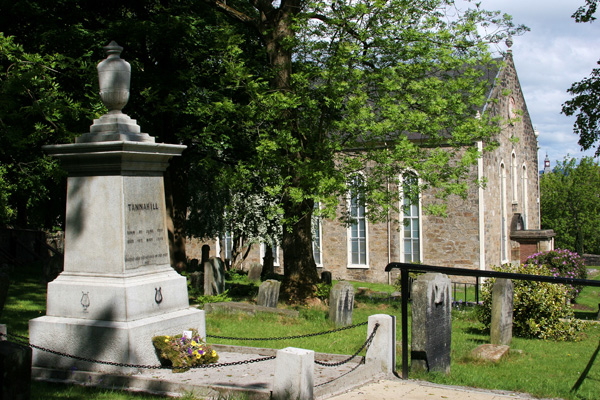
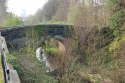
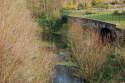
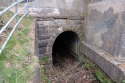
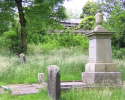
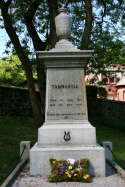
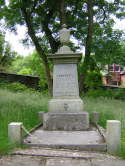
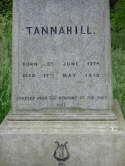
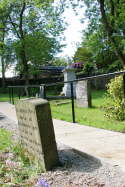
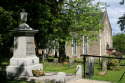
He was often prone to bouts of depression and he drowned himself in a canal in Paisley on 17 May 1810. He was buried in Castlehead Church.Tannahill was buried in what is now Castlehead Church in 1810 in a simple grave and in 1867 a monument was erected over his grave as a tribute to him and his poetry.
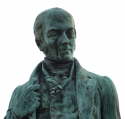
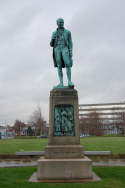
A statue of Robert Tannahill was erected in Abbey Close to commemorate Paisley’s most famous poet.
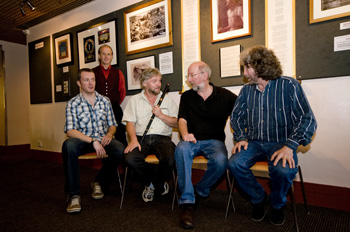
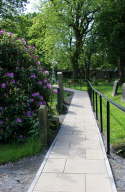
To mark the 200th anniversary of his death, a series of events were organized. A wreath was laid at his statue in Abbey Close by Provost Celia Lawson and members of the Tannahill/MacDonald Club. The delegation then moved on to Castlehead Church to open a new walkway up to the poets burial place.
|